Problem-driven
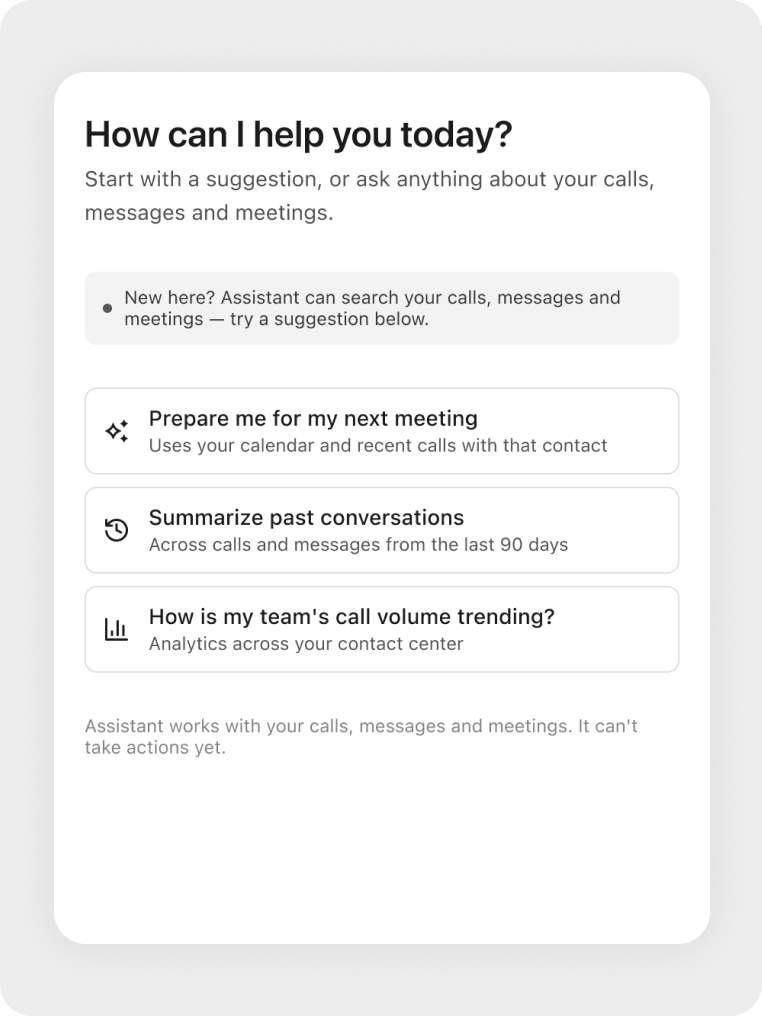
A familiar chat experience with suggested prompts to help users discover what they can ask.
 Mariana Perez Villanueva
Designing an AI assistant that brings together information across calls, messages, and meetings, helping teams find the context they need, when they need it.
The opportunity
Every customer interaction generates valuable information. But that knowledge often lives across individual calls, messages, meetings, and conversations handled by different teammates or contact center agents.
We saw an opportunity to bring that information together through an AI assistant, making it easier to retrieve and use across different moments of the customer journey.
Get up to speed on a customer's history and prepare for the conversation.
Find relevant information from previous interactions or the knowledge base without asking customers to repeat themselves.
Summarize key information, share updates, and follow up with the right context.
A broader experience
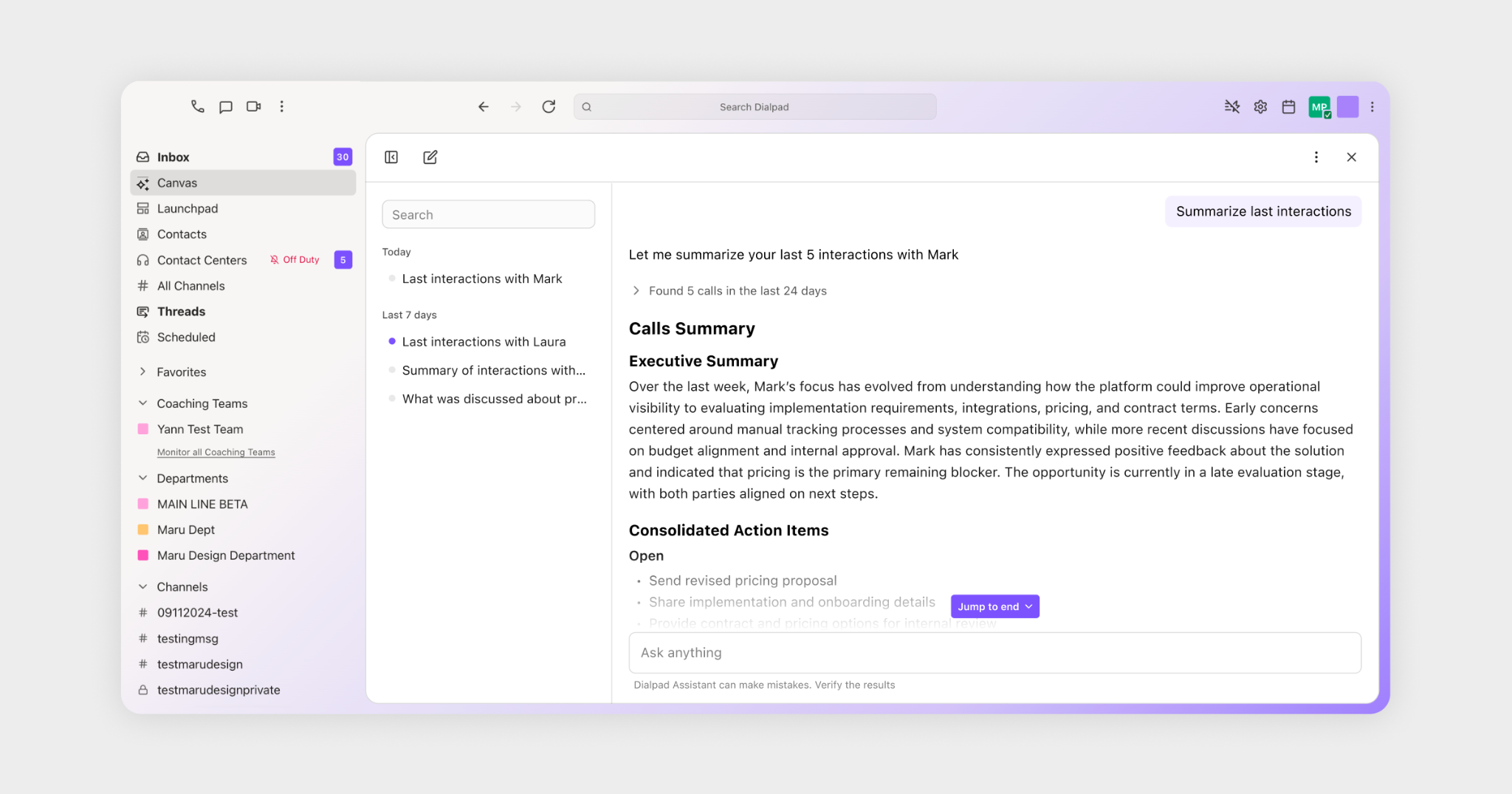
We started with a focused proof of concept: an assistant that could answer questions about a single contact using information from calls, messages, and meetings.
As the project evolved, we expanded its scope beyond individual contacts, enabling broader questions and information retrieval across conversations.
Customer interviews also helped shape our priorities. One key insight was the importance of accessing existing knowledge base content, which led us to prioritize it as an additional source of information for the assistant.
AI-assisted exploration
I used Claude Code and the Figma MCP to explore interaction models informed by customer research, benchmarks, and real-world use cases, then built an interactive prototype directly in code.
These explorations helped us compare approaches and identify patterns to refine.
A familiar chat experience with suggested prompts to help users discover what they can ask.
An organized set of capabilities that helps users navigate different tasks and explore what the assistant can do.
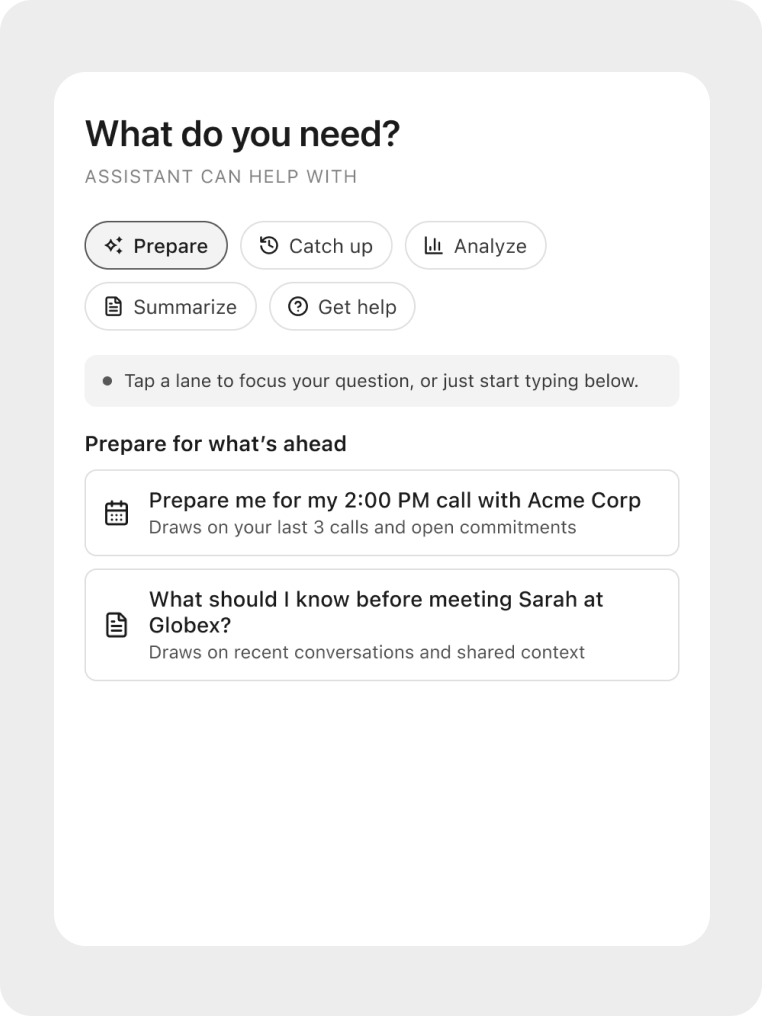
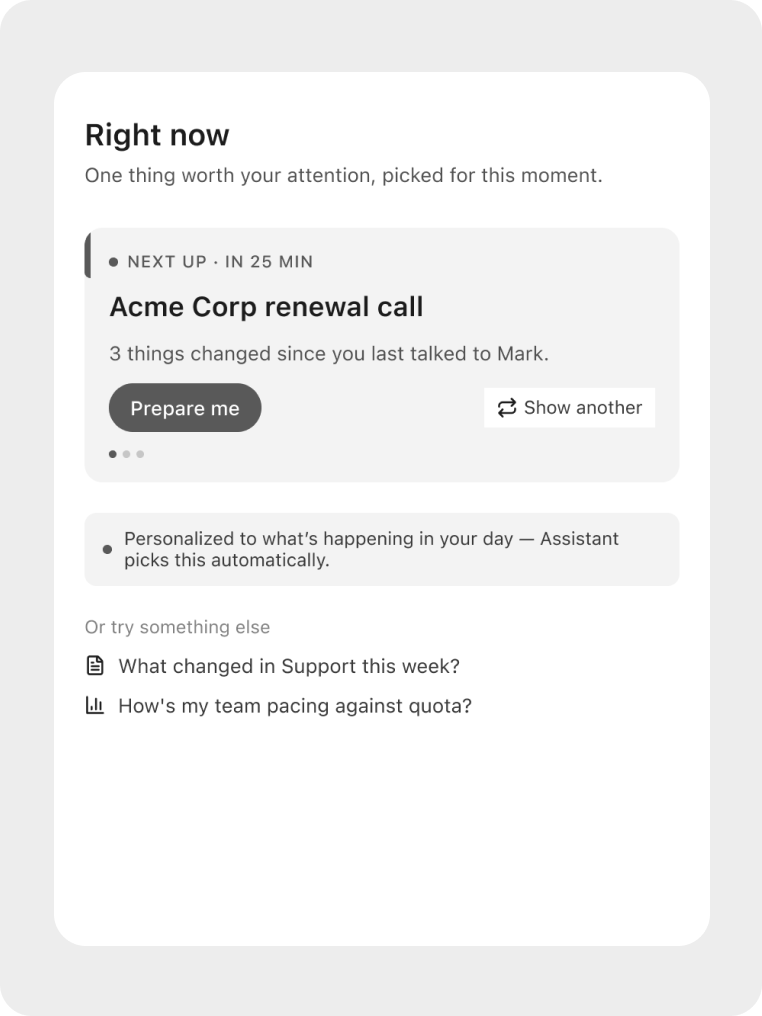
A personalized starting point that proactively surfaces relevant suggestions based on the user’s current context.
Everyday use cases
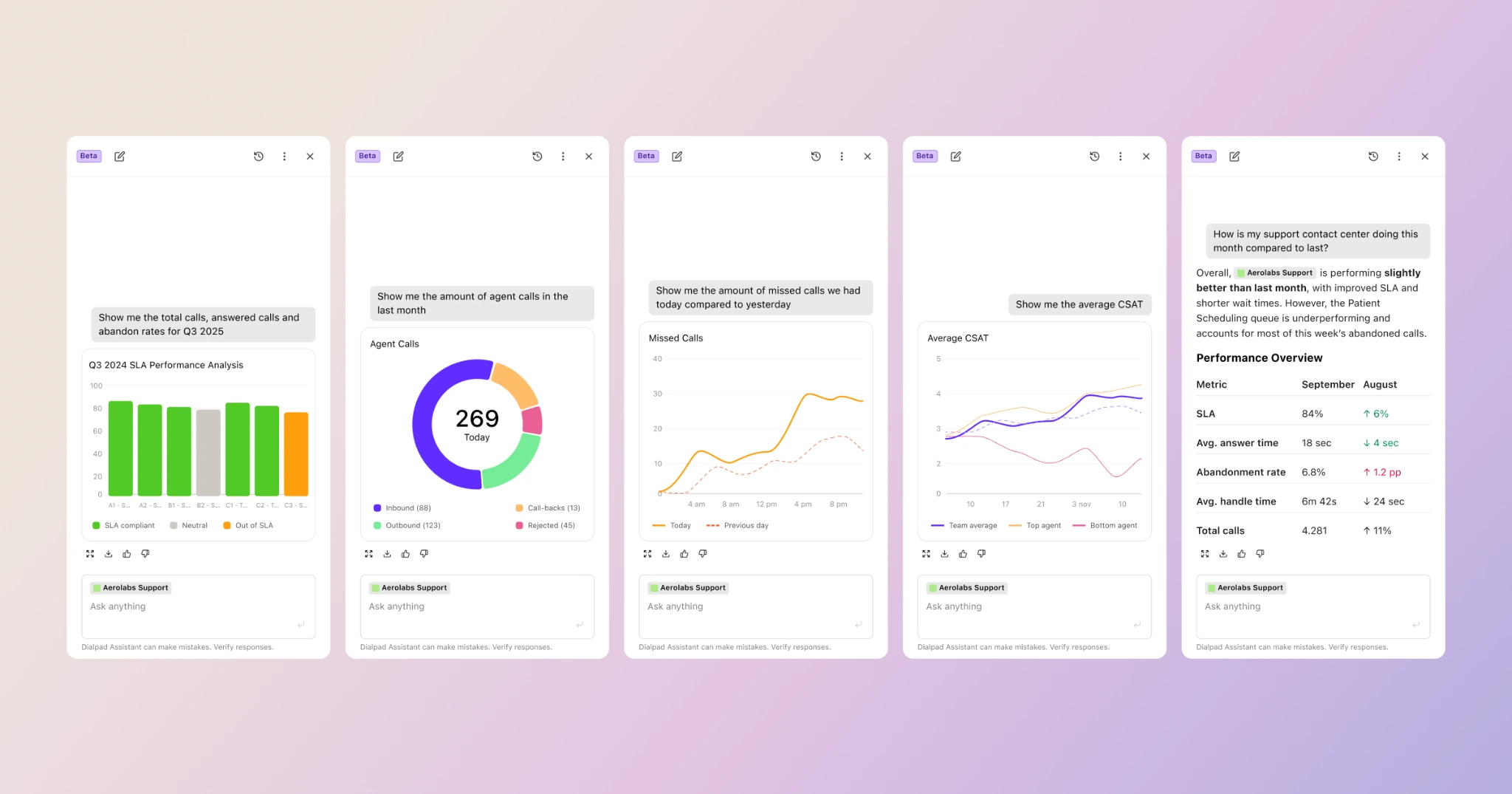
Alongside the standalone assistant, we explored ways to bring relevant information into everyday workflows, from catching up on conversations to supporting live calls and reviewing contact center performance.
Surface important updates across conversations, helping users get up to speed and identify what needs their attention.
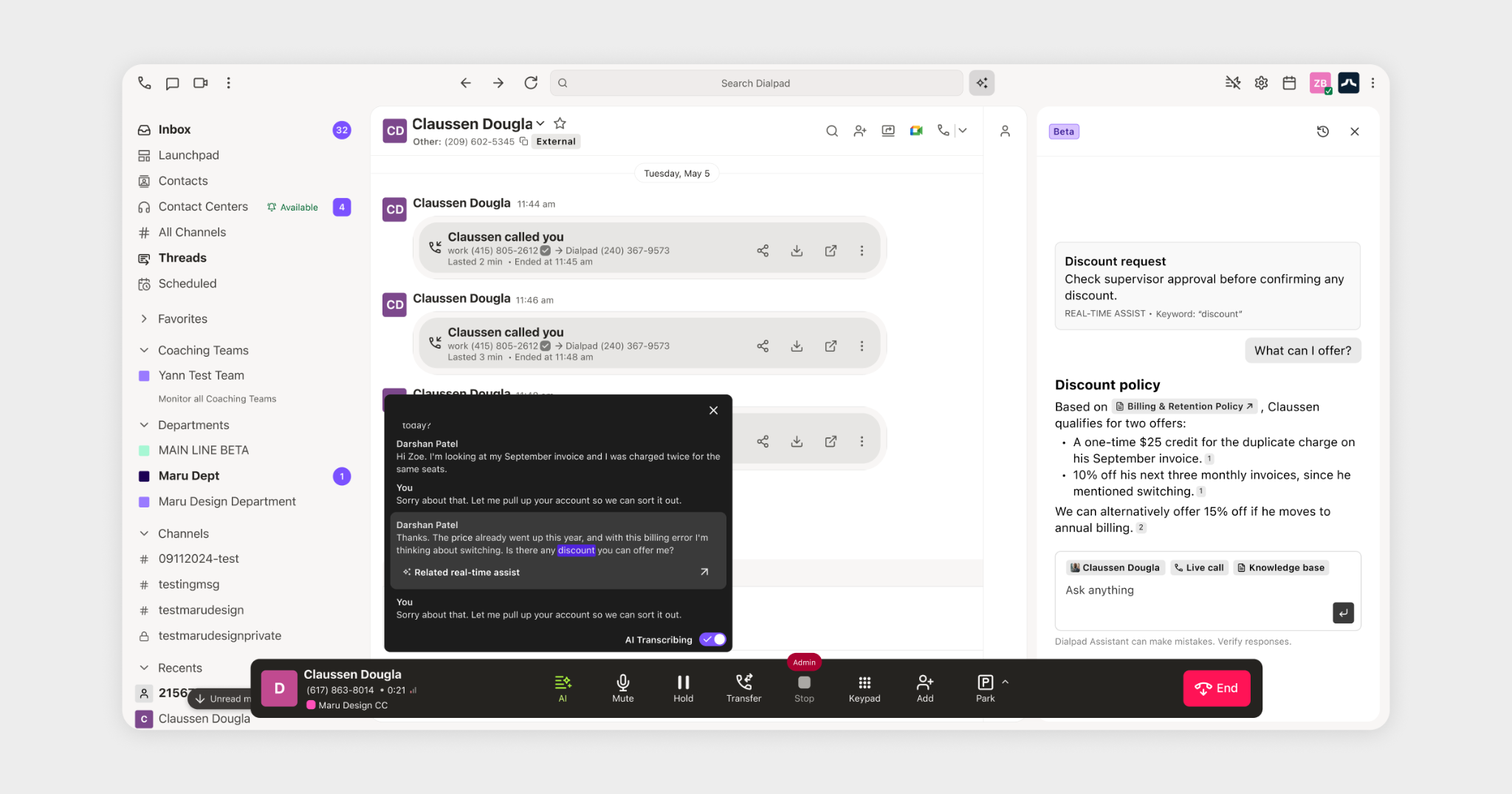
Bring previous interactions, live transcripts, and knowledge base content into the calling experience, helping users find answers while the conversation is happening.
Help contact center supervisors explore performance through natural-language questions. Compare metrics over time, review team activity, and identify areas that need attention through charts and summaries.
As we brought more information sources into the assistant, we needed to help users understand what context it was using and where its answers came from.
Making the scope of each question visible, so users could understand what information the assistant was drawing from.
Linking answers back to the original sources, helping users verify information, explore further, and build trust in the assistant.
Design and validation
The project brought together Product, Design, Engineering, and NLP teams, who were building an in-house AI orchestration agent.
I built an interactive prototype directly in code using Claude Code, working closely with engineers to explore interactions, validate feasibility, and refine the experience as the underlying capabilities evolved.
This close collaboration, together with customer research, helped us shape an assistant grounded in both real user needs and technical possibilities.